
We Are Transforming Disaster Management
By Ibrahim Dan-Halilu
Ahmed Mustapha Habib, a scion of the famous and respectful late Habibu Fari Yanleman family from Jigawa State was appointed to head the National Emergency Management Agency (NEMA) as its Director General on June 21, 2021. Two years into his tenure, he has proved beyond reasonable doubt that his appointment is not only appropriate but timely as he came in with over 25 years of experience in supply chain management, which is one of the essential requirements for disaster management. He has undoubtedly raised the profile of the agency beyond expectation with his style of leadership and networking acumen. In this interview with the Executives Editors, Alhaji Ahmed clears the air on a number of issues, including the recent evacuation of Nigerians from Sudan.

Question: Let’s start with the recent evacuation of Nigerian students from Sudan because it is the most recent operation involving NEMA. What role did NEMA play in the evacuation of students?
Answer: The Sudan evacuation is one of the most challenging operations NEMA and its partners have accomplished in the recent past. You may recall that not long ago we evacuated Nigerians from Ukraine when the war broke out between Ukraine and Russia. We also evacuated Nigerians stranded in the United Arab Emirates (UAE) and India after the Ukraine evacuation. So it is a routine thing so to say. Yet, the Sudan evacuation in the sense that it was a very tense situation with urban warfare going on between the warring factions, and there was complete breakdown of law and order, markets are closed down and the financial system completely down.
From day one NEMA being aware of its legal mandate to evacuate Nigerians from any foreign country in crisis, we swung into action the moment the crisis erupted. We wrote the Ministry of Humanitarian Affairs and all relevant MDAs to get ready for the imminent evacuation mission. I personally moved to Egypt a neighboring country to Sudan to work with the Nigerian Embassy in Cairo to take people to Aswan, a border town with Sudan for subsequent airlift to Abuja. As expected, initially the process was a logistical nightmare, very slow but subsequently we succeeded in bringing back home more than 3,000 Nigerians in a safe and dignified manner to the embrace of their loved ones. We deserve commendation for sure.
Question: Why did it take almost three weeks to get Nigerians out of Sudan?
Answer: As I said and you are very aware, it was very difficult situation, it was war going on with bullets flying and fighter jets hovering in the skies of Khartoum dropping bombs. It was a very complex and uncertain situation because of the escalated crisis, yet no country evacuated a large number of its citizens like Nigeria did. I believe that the Federal Government of Nigeria deserves some commendation for evacuating such a large number of citizens back home in safe and dignified manner.
Question: Some Nigerians have blamed NEMA for the delay in evacuating the students. Others accused the agency and its mother ministry of diverting funds approved for the operation. Is that a fair judgement?
Answer: It is the same question you are asking in different words. In respect to delay it seems you and some few people did not appreciate the situation of intensive battle at hand we are taking about at Sudan. In respect of accusation for diversion of funds, I make bold to say that the hallmark of NEMA operations in saving lives in line with the humanitarian principle of humanity, neutrality, impartiality, transparency and accountability not only to our principals but also to the affected persons. It is also very important for the public to know that several other countries requested their citizens to transport themselves to Port Sudan for subsequent evacuation at their own individual cost. Yet, Nigerian government evacuated all its citizens free of charge to buttress the importance it place on the safety, welfare and security of its people.
Question: How many Nigerians did NEMA evacuate from Sudan? What number are students?
Answer: We evacuated 2,538 Nigerians back home safely, and we are currently working with the Foreign Affairs Ministry to bring back another 341 additional persons once they have been profiled by the officials of the Nigerian embassy in Khartoum. Majority of them are students including some of them with children.
Question: What rehabilitation has NEMA provided to the evacuees so far?
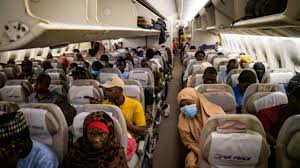
Answer: We brought them back home safely, we gave them food, water, medicare where needed, and the Dangote Foundation magnanimously gave each of them N100,000.00 for transport back to their respective states. Most of them met their family members waiting for them at Nnamdi Azikiwe International Airport, Abuja. We expect the states and local governments, and the ministries of education at state and federal levels to continue where we stopped.
Question: What would NEMA have done differently if it were to be leading the evacuation operations?
Answer: Every evacuation operations is unique, it depends on the prevailing emergency situation. NEMA is always ready to activate its partners the moment we receive an alert on an impending emergency situation.
Question: What would you tell the parents of returning students who blamed NEMA for the delay in evacuating their sons and daughters?
Answer: As I said earlier, hundreds of parents were at the airport with us to receive their children and they commended President Buhari, the Federal Government, NEMA and its partners for the operations. If there is anybody blaming NEMA for a delay, the person could not comprehend the crisis situation in Sudan, and the difficulty of logistics in a period when safety, security, law and order has totally broken down.
Question: How would you rate the evacuation exercise?
Answer: Like any other disaster management operations, it is challenging, yet at the end of the day it went on very well. We thank God almighty that no casualty was recorded as all the stranded persons were repatriated safely.
Question: What lessons have you learnt from the Sudan evacuation?
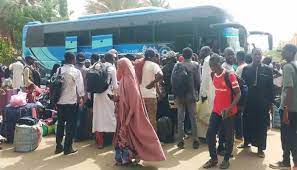
Answer: Some of the lessons learnt include the power of effective coordination. Too many cooks spoil the broth. Critical decisions must be taken by responsible agencies even under situation of limited information to save lives and safeguard the dignity of citizens. Another lesson was that with the kind of unsubstantiated and distorted information being circulated by the social media in the internet, some of the parents and wards of those stranded students might have suffered avoidable frustration and trauma during the period.
Question: Where do you go from here? What processes and procedures has NEMA put in place to safeguard against a repeat of the Sudan experience?
Answer: We are going to do an after action review together with our partners to evaluate the operation, identify lessons leant in order to improve on our future missions. NEMA does not have the magic wand to stop nations or group of people settling their score in the battle field. We shall continue to hope and pray that war does not break out in any country of the world.
Question: Let’s talk about NEMA as an emergency agency. Some Nigerians perceive the functions of NEMA as purely one of intervention in instances where states are overwhelmed to handle emergencies. Would that be an appropriate description of the agency’s role?
Answer: Absolutely No. we are working assiduously towards the paradigm shift towards disaster risk reduction as against disaster response. We just returned from the UNDRR midterm review meeting in New York. Some of the issues discussed there are how the nations of the world will reduce to minimum the rate of occurrence of disasters and NEMA is fully working toward that direction.
Question: What could you describe as the major achievements of NEMA from the time you assumed duties as its Director General?
Answer: I restored the morale of NEMA staff and established industrial harmony between management and staff. Together with all of NEMA staff we are working hard to bring back NEMA to its past glory, and take it to greater heights, and I am sure Nigerians are keenly watching us and appreciating that.
Question: What are the major challenges that the agency is facing currently, and what efforts is the management making to address them?
Answer: I am working hard together with SEMAs to improve on capacities of state and local movement authorities to take and own up to their responsibility of being first responders that save lives in the event of sudden onset disaster. This we are doing with the understanding that disasters are all local. Every disaster happens in a particular state, a particular LGA and a particular community and to save lives we must take disaster risk management to the grassroots.
Question: Who are the key partners of NEMA in carrying out its functions? How much support and cooperation does the agency receive from the partners?
Answer: NEMA cannot succeed in its life saving activities without working with SEMAs, the security agencies, the media, MDAs, the Nigeria Red Cross, the United Nations system, volunteers, NGOs and public spirited individual and the entire Nigerian population. As we always say, disaster management is everyone’s business.
Question: How much of foreign assistance does NEMA receives?
Answer: You don’t quantify foreign assistance in monetary terms. We have received support in terms of capacity building, search and rescue equipment, equipping of NEMA situation room and the sharing of experiences. Several countries have supported Nigeria in the past just as Nigeria has supported other countries in their time of need and there is no doubt we shall continue to strengthen our collaboration with the global community.
Question: To what extent does NEMA harness technology and innovation in both its operations and administration?
Answer: Technology is always evolving. At NEMA we are using technology for real time communication with NEMA situation room from incident site in times of emergency. We intend to improve our real time humanitarian dashboard and inventory of our assets located in all the NEMA zonal, territorial and operations office nationwide. We are happy that NIMET and NIHSA are always improving on the use of science and technology to give us credible and actionable hydro meteorological early warning to avert disasters. It is a work in progress depending on available funds.
Question: What would you want to be remembered for when you leave office?
Answer: To remembered as that persons that transformed NEMA into the flagship of disaster management in Africa and to have built a well informed and better resilient Nigerian citizenry.
Question: In some countries, Emergency Management is domiciled in the presidency. Would you advise the government to do same in Nigeria?
Answer: Under the global best practices in disaster management, a disaster management agency like NEMA need to be under the presidency. It is only Mr. President that can declare a state of national emergency in case of a catastrophic disaster event to enable the immediate activation and mobilization of resources from all MDAs for life saving operation and to appeal for international support. It is the ideal thing.
Question: What are the implications of placing NEMA under the Ministry of Humanitarian Affairs?
Answer: The Federal Government of Nigeria has placed NEMA under the Ministry of Humanitarian Affairs, Disaster Management and Social Development, and we are working together under its guidance to deliver service to Nigeria and Nigerians.
Question: What would be your advice to the incoming administration with regards to emergency management?
Answer: NEMA will require additional funding to enable it respond effectively to disasters, ensure complete recovery and also to work hard towards disaster risk reduction in Nigeria and beyond in the face of increasing rate of occurrence of disasters not only in Nigeria but across the world. If we get it right in Nigeria, the rest of West African countries will follow suite. Furthermore, I want to request you members of the press as esteemed partners to help us disseminate our disaster early warning messages to the public to ensure that we accomplish our mission of building a well informed and better resilient citizenship. As we always say disaster management is everyone’s business.
TE: Thank you, Sir. It’s our pleasure interaction with you.
NEMA: Thank you for having me.

+ There are no comments
Add yours