
By Garba Dangida
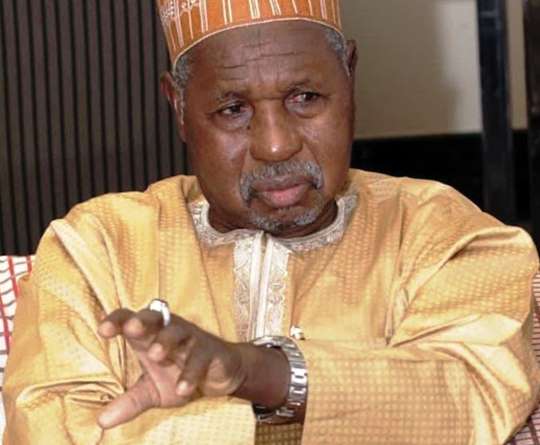
As the former governor of Katsina State, Aminu Bello Masari took a bow after eight years tenure as the Executive Governor of the state, what will come to the minds of many citizens of the state is to ask the question, what legacies has the former governor left for the people of the state?
This question has been raised by many even before he left office, and the answers are as diverse as the perspectives that the assessors have adopted in their judgements.
The mistake that most people make is to attempt a comparison or contrast between his regime and those of his predecessors, late Umaru Musa Yar Adua and Ibrahim Shema, whose eight year tenures each were regarded as the golden period of Katsina State because of the unprecedented transformations the state had undergone in 16 years of their reigns.
In fairness to Governor Aminu Bello Masari, he inherited an almost empty treasury, amidst dwindling oil revenue and world harsh economic recession engendered by the notorious global pandemic known as Covid-19.
The pandemic not only affected revenue inflows of developed and underdeveloped countries, but further destroyed millions businesses and households across the world. Even developed economies could not contend with its negative impact as it put everything on hold like the end of times.
To make a bad case worse, Katsina State was confronted with the notorious and deadly bandits attacks on communities as a major security challenge which no state could check because of their weak constitutional position. The federal government which should have brought the menace under control appeared helpless as it lacked the political will and military capacity to degrade the insurgence.
As an astute administrator and savvy technocrat, Aminu Bello Masari did not try to reinvent the wheel by churning out rhetorical agendas as some of his contemporaries were doing. He launched the Restoration Agenda, which signifies his mission to revive decaying infrastructure and address some shortcomings of his predecessor.
In the area of education, he renovated hundreds of primary and secondary schools, equipped them with furniture and learning materials, and recruited over 3000 teachers to replace those that died or retired. He utilized the S-Power programme to leverage the 5000 NCE/HND holders reserve to fill staff shortage in primary schools.
As someone who believes in quality over quantity, Masari introduced qualifying exam for final year students in secondary school to ensure that only those with 5 credits and above were sponsored by government to write the WAEC SSCE, while those with 4 credits were sponsored for the NECO exam. The rest of the students were offered the option of learning some vocational skills in the 12 renovated vocational centres inherited from the previous administration.
Though the policy did not go down well with many parents and educationists, the outcome was quite impressive as majority of those who passed the qualified also passed the external examinations with 5 credits and above. Those who enrolled into the vocational centres came out with practical skills that are in dire need in the communities thereby reducing unemployment and youth restiveness.
As Masari himself confirmed in a recent interview “We have recorded significant performance of our students in external examinations which is a yard stick for us to assess whether our restoration agenda is working on not,” Masari himself told a reporter in an interview.
Beyond education infrastructure, Masari further improved the welfare of teachers by promoting those who were due over three year before which boosted their morale and encouraged them to give their best to their students.
The civil servants in the state will not forget Aminu Bello Masari for clearing the pension arrears he inherited from the Ibrahim Shema Administration which cumulated into billions of Naira. He not only paid the arrears fully, but ensured timely payment of the retirees’ pensions until he left office.
The only area still pending is the huge gratuity arrears which is largely due to lack of a proper pension administration in the state which addressed appropriately by signing into law the contributory pension scheme bill that will integrate civil servants in the state into the national pension plan that guarantees effective administration and payment of gratuities to retiring employees.
The health sector also received a boost under Masari. He not only renovated the old general hospitals but provided them with working tools, drugs, and ambulances for efficient service to the people. He also established 30 new primary health care centres where none existed and employed more than 1000 paramedical personnel to promote affordable and accessible health care for the rural population.
Masari launched the Contributory Health Care Scheme to increase access to affordable and quality health care for muddle and lower classes of civil servants in the state. He also recruited medical doctors, nurses, and laboratory technicians to boost the sector.
In the agricultural sector, Aminu Bello Masari through his restoration agenda aimed to restore Katsina State to its lost glory as a major producer of agricultural products in Nigeria especially grains. This dream began to take shape with the launching of the rice production scheme in Jibia Dam through the Anchor Borrowers Programme of the Central Bank of Nigeria.
Under the scheme, rice farmers were provided with credits for improved seeds, pesticides, herbicides, and fertilizers. The state government guaranteed minimum prices for the purchase of the rice harvest to encourage the farmers. It also offered agricultural extension services to the farmers to update them with latest knowledge and skills on rice production.
As part of the value chain, the Masari administration procured mine rice mills which were established in selected locations in the state to ensure that the produce are processed and packaged before moving it to the market.
Katsina State is one of the few states in the north that have developed a database of farmers for easy location and engagement. The database captured all registered farmers and linked them to their bank verification numbers for easy delivery of government support.
The Masari administration’s agricultural policy was unique and very innovative. First, it initiated the process of recovering lands grabbed by influential persons in the state and convert it into agricultural lands for distribution to young enterprising farmers to cultivate crops. Secondly, the administration embarked on the process to establish organic fertilizer plants that will use molasses from sugar cane.
Thirdly, there was a deliberate effort to encourage the production of legume crops like cowpea and groundnut for local consumption to improve nutritional intake by people in the state. Fourthly, the administration envisioned the development of a greenhouse for vegetables production for export, which in a way aimed at transforming the state into a commodities exporter..
One of his enduring legacies would be the two underpass bridges he constructed at the tail end of his tenure. The Koafar Kaura and Kofar Kwaya Underpasses have reduced traffic congestion besides giving the ancient city of Katsina a modern outlook.
Based on the circumstances beyond its control, one may not be wrong to say that the Masari Administration has achieved more with less which many citizens may not appreciate because of the overwhelming security challenges hat have overshadowed the positives of the outgoing Aminu Bello Masari administration. But posterity will one day take a deeper reflection on the performance of Aminu Bello Masari and gives its impartial verdict.

+ There are no comments
Add yours