
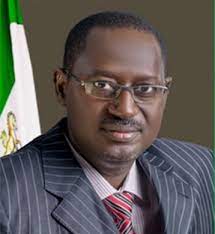
Architect Ahmed Musa Dangiwa is not a new face in Nigeria’s housing sector. Prior to his appointment as the Minister of Housing and Urban Development by President Bola Ahmed Tinubu, Ahmed has served as the Managing Director of the nation’s regulatory body for the housing industry, the Federal Mortgage Bank of Nigeria (FMBN) after more than 20 years managing his own architectural firm.
During his tenure at the FMBN, Dangiwa brought a number of far reaching reforms that transformed the nation’s housing industry to provide affordable housing to Nigerians in the middle and lower classes.
Among his notable achievements was the increase in housing loan disbursement from N152 billion to 314billion which has made many Nigerian middle class workers home owners. He further increased the Housing Stock from 20,435 to 32,018 to match the emerging demand from loan beneficiaries.
Through his aggressive advocacy and engagement with state governors, the FMBN has raised the National Housing Fund (NHF) collections from N232.8 billion, which was total collections from NHF inception in 1992 to April 2017, to N495.8billion in a span of four years.
Dangiwa further developed or enhanced new affordable housing products for low income contributors to NHF such as the Rent To Own Scheme, Home Renovation Loan, Cooperative Housing Development Loan and Ministerial Pilot Housing Scheme.
For the first time in the history of the bank, more than 25 states have enrolled their workforce in the National Housing Fund which afforded the enrollees opportunity to access the mortgage and purchased their own homes.
His tenure witnessed massive deployment of technology for digitalization of the FMBN’s operations for efficiency, transparency and accountability in housing delivery and administration.
Dangiwa’s dream of expanding the capital base of the FMBN to over two may come to fruition as he assumed his new role of the Minister of Housing and the backing of President Bola Ahmed Tinubu whose Renewed Home Agenda has provision of housing for zero and low income earners as one if its focal points.
Dangiwa has already outlined a number of reforms aimed at achieving this lofty goal. Among the reform measures is the creation of the National Land Commission that would provide necessary framework, guidelines and regulation for operationalizing the Land Use Act of 1978 to achieve efficient land administration in Nigeria.
The Minster who made the disclosure while declaring the 28th Conference of Directors of Land recently in Lagos, noted that most of the fundamental issues impeding land administration would require legislative amendments and policy interventions at national level.
“Currently we have a situation where the Land Use Act was enacted in 1978 but there was no complementary institution set up alongside it to provide the necessary framework, guidelines, and regulations for operationalising it. We are working to establish a National Land Commission that would fix this gap and chart a new way forward for effective land administration in the country,” the minister revealed.
According to Dangiwa, the National Land Commission when established “will improve land titling and boost Nigeria’s ranking on the World Bank Ease of Doing Business where we currently rank 186th out of 190 countries on the World, Ease of Doing Business index in terms of ease of registering properties, land reform strategy.”
The second reform being pursue under Dangiwa is the country-wide adoption of the Model Mortgage Foreclosure Law (MMFL) which would be a housing industry stakeholder initiative and part of the Renewed Hope Agenda of President Bola Ahmed Tinubu, focusing on establishing an enabling environment for investment in real estate and the growth of mortgages in states.
The MMFL is expected to provide contemporary provisions on the creation, registration, and enforcement of mortgages, along with remedies like foreclosure and the enforcement of mortgages on real properties and related purposes in Nigeria.
As of now only four states in Nigeria have adopted the MMFL, namely Ekiti, Kaduna, Lagos, and Nasarawa States. But the minister is passionate about pushing foe the adoption of the policy in the remaining 32 states and Federal Capital Territory. He appealed to the Directors of Land in the states to work with their state governors and ensure they key into the laudable MMFL policy to enable the federal government drive its passage in all the states of the federation.
Another policy reform undertaken by Dangiwa is the slum upgrading and urban renewal projects in some selected states. The minister stated that plans are under way to launch the projects with a view to improving the living standard of the majority who live in those slums.
The Minister said the Tinubu administration is committed to building affordable and descent houses houses for middle and low income earners in each of the 36 states, and had already requested state governments to provide 50 hectares of land for the project hoping that it would reduce the cost of production.
Under this programme, the federal government will deliver 34,500 units of Multi-Level Flats to cater to low-medium income earners, Terrace and Detached Bungalows and also Duplexes for the high-income earners under Phase 1 of the Renewed Hope Cities, in each of the six geo-political zones of the country and FCT; as well as 500 housing units of 1,2- and 3-bedroom affordable bungalows per site in each of the remaining thirty States, under the Renewed Hope Estates.
The prject would be sponsored by Federal Ministry of Housing and Urban Development’s budgetary allocation, the Federal Mortgage Bank of Nigeria (FMBN) and through Public Private Partnerships with reputable developers while ownership options include mortgage loans, Rent-to-Own and outright purchase”, he specified.
Dangiwa said the Ministry is fast tracking all units under the National Housing Programme to ensure that they were completed and allocated to substantive applicants who meet the requirements for NHF loans or other schemes.
“We have set up a Ministerial Committee to review the contracts of the abandoned sites as appropriate. We will also assess both the technical and financial capacity of the contractors to ensure that we proceed with only those that are capable. Our goal at the end is to ensure that the government gets value for the investment in the National Housing Programme and that we also learn the lessons from its challenges”, he stated.
Other highlights of the reform agenda of the Minster include the National Social Housing Fund (NSHF) which aims to deliver decent accommodation to all Nigerians regardless of their income level. The policy framework is being worked out.
The minister is also engaging with stake holders to find ways of giving the local building materials manufacturing industry the boost it needs to upgrade its plants and bring down the cost of building materials using local contents.
In addition to reforms, Dangiwa is engaging with various stake holders in the industry to tap from their expertise and build synergy for effective implementation of the ministry’s reform agenda aimed at enhancing housing delivery in Nigeria.
He met with the Presidential Technical Committee on Land Reforms which was formed over ten years ago by the Umaru Yar Adua administration but its report has not been considered by successive governments.
Dangiwa invited the committee recently to brief him on its findings. He has promised to fast track and incorporate some of the recommendations into the ministry’s strategic plan of action. Already he has set up a committee to study the report and advise him on its implementation.
“We invited and met with the Presidential Technical Committee on Land Reforms; we now have access to the comprehensive work they have done over the past 14 years on Land Reforms in our country. Immediately after the meeting we set up an Internal Ministerial Committee to review and recommend for inclusion in our land reforms strategy, relevant parts of their recommendations will be the establishment of the National Land Commission to spell out the guidelines and regulations for operationalizing the Land Use Act, 1978”, Dangiwa told The Executives.
To this end, a Housing Reform Team of experts and stakeholders has been constituted in order to ensure that housing agencies under the supervision of the Ministry are enhanced to deliver on the Ministry’s target of providing affordable homes to Nigerians.
Dangiwa explained that the reform team would be made up of representatives from Housing Development Advocacy Network, Agencies, professional bodies, as well as academia, to develop a robust framework for the reform of the housing sector by thoroughly reviewing relevant laws and facilitating necessary legislative amendments.
Some of the laws to be reviewed include the Land Use Act, 1978, National Housing Fund (NHF) Act, 1992, Federal Mortgage Bank of Nigeria (FMBN) Establishment Act, 1993, and Federal Housing Authority (FHA) Act, 1973, among others.
“The team will be tasked with streamlining all previous reform blueprints, whitepapers for the agencies and outlining areas requiring reform, with a focus on enhancing efficiency, transparency, and accountability”, he further explained.
The minster further revealed plans to create a land reform committee comprising of state governments, traditional rulers, relevant agencies, professional bodies, and academia that will advocate for the amendment of the outdated Land Use Act of 1978.
National Social Housing Fund (NSHF) to cater to the housing needs of No income and low-income Nigerians and expressed eagerness to learn from Algeria’s successful social housing model.
Arc. Dangiwa is leaving no stone unturned in his search for solutions to the unacceptable housing deficit in Nigeria. He met the Algerian Housing Minster at a conference in Algiers recently where they shared experience, perspectives and knowledge on challenges and strategy for public housing in their respective countries.
The discussion expanded Dangiwa’s horizon about available option for public housing in Nigeria. As Belaribi explained, Algeria diverse approaches, including delivering units without any upfront payment, a rent-to-own scheme managed by the Agency of Amelioration and Development of Housing (AADH), and tailoring housing sizes based on income and family size.
He also discussed the innovative National Bank on Housing, allowing subscribers to save for homeownership, thereby reducing the government’s financial burden and the the Algerian integrated cities approach, which includes incorporating schools, hospitals, roads, and ensuring security measures.
Algeria has built over one million housing unites under those schemes in 2020 alone, and another 440,000 in 2021.

+ There are no comments
Add yours